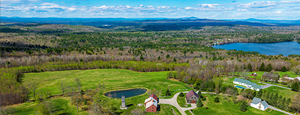
One of the best ways you, a landowner, can protect the important natural features of your land is to place a conservation easement on your property.

A conservation easement provides permanent protection from land use that could damage or destroy its scenic, recreational, ecological, and natural resource values.

Each easement is drafted to reflect the conservation values of the land, the personal needs of the landowners, and the objectives of the organization or agency that holds the easement.


WHAT IS A CONSERVATION EASEMENT?
A conservation easement deed is a permanent, legally binding agreement between a landowner and a qualified conservation organization or public agency that restricts use of the land to protect its significant natural features. In New Hampshire this is authorized by RSA 477:45-47.

WHO OWNS THE LAND WHEN AN EASEMENT IS PLACED ON A PROPERTY?
As a landowner, you continue to own and manage the land while giving up the right to engage in certain intensive uses of the property. You will continue to be responsible for paying the property taxes on the parcel.

WHO ACCEPTS AND ENFORCES CONSERVATION EASEMENTS?
According to New Hampshire state law, conservation easement can be held by qualified non-profit conservation organizations or public agencies able to ensure that the property is protected in perpetuity.

Private groups such as the Forest Society, the New Hampshire Audubon, The Nature Conservancy, and local land trusts, are equipped to receive and enforce conservation easements. Public agencies such as town conservation commissions, county conservation districts, the NH Fish and Game Department and the Division of Forests and Lands also hold conservation easements.

WHAT USES ARE PERMITTED ON CONSERVATION LAND?
Typically, conservation easements in New Hampshire allow the landowner to continue to use the land for agriculture, forestry, non-commercial outdoor recreation, wildlife habitat management and all other uses that are compatible with the conservation goals for the property and not specifically prohibited by the easement.

WHAT USES ARE PROHIBITED ON CONSERVATION EASEMENT LAND?
Conservation easements generally prohibit development, subdivision, commercial and industrial activities, mining or excavating, and dumping of waste or disposal of hazardous materials. Easements may also include other restrictions that reflect special resource values or landowner interests.

CAN LANDOWNERS REQUEST SPECIFIC USES ON THE PROPERTY?
When you negotiate the details of the easement with the easement holder, you can request specific uses that you would like to be allowed in the easement. For example landowners may retain the right to build and maintain certain roads and buildings, to create a pond for wildlife, to maintain a clear view, or to post the property against trespass.

DOES THE EASEMENT GRANT ANY RIGHTS TO THE EASEMENT HOLDER?
The conservation organization that holds the easement has the right to enter the property to monitor its condition and the obligation to enforce the easement, in court if necessary, to ensure that the terms are upheld and the resources are protected.

DOES GRANTING A CONSERVATION EASEMENT GIVE THE PUBLIC THE RIGHT TO ENTER MY PROPERTY?
Conservation easements do no automatically give the public any rights to enter or use protected property. Most easements let the landowner decide whether or not to allow public access. However, if public money is used to purchase a conservation easement guaranteed public access for certain uses is often required.

DOES THE EASEMENT RESTRICT MY ABILITY TO SELL, DEVISE, OR GIVE MY LAND IN THE FUTURE?
No, you may sell or convey the land to a different owner at any time at any price. Conservation easements stay with the land forever, so all future owners will be required to follow the terms of the easement.

ARE THERE FINANCIAL BENEFITS TO DONATING A CONSERVATION EASEMENT?
Yes. By donating a conservation easement you may benefit in several possible ways. Consult an experienced qualified professional to find out how these possibilities apply in your personal situation.

Income taxes:
If you donate some or all of the value of the conservation easement to a qualified organization, you may be eligible to take a federal income tax deduction for the value of the charitable gift. To be deductible for federal income tax purposes the easements must meet certain standards established by the federal government.

Estate Taxes:
The effect of an easement on property value is recognized when property is appraised for estate tax purposes. If the easement reduces property value, it will lower overall estate value and may decrease estate tax liability. Therefore, easements may help heirs to avoid being forced to sell off land to pay estate taxes, keeping family land in the family.

Gift Taxes:
The IRS requires recipients to pay taxes on gifts over a certain value. If you want to give your land to your children without requiring them to pay taxes on the value of the land, you may need to give it them over a number of years to stay below the taxable value level. Conservation easements may help to reduce the value of your property, making it possible you to give more land in any one year to your children.

Property Taxes:
Conservation easements can reduce property value, which, in turn, may reduce property tax assessment. If your land is already enrolled in the Current Use Assessment Program, you will probably not see any further reduction in property taxes as the result of granting a conservation easement. If your land is not already in the current use program, you may wish to apply for a Conservation Restriction Assessment and may probably see a reduction in property taxes.

HOW ARE CONSERVATION EASEMENTS ENFORCED?
The conservation organization or agency that holds the easement has the authority and obligation to ensure that the property’s conservation values are protected. Easement holders are responsible for documenting the condition of the property at the time the easement is signed and regularly inspecting the site to make sure the property is maintained in compliance with the easement. If activities taking place on the land violate the easement agreement the easement holder will work with the landowner to curtail the damaging activity and bring the property back into compliance with the easement. Specific procedures for enforcement are outlined in the easement document.

WHAT EXPENSES ARE INVOLVED WITH DONATING A CONSERVATION EASEMENT?
Most conservation easements involve expenses for items such as legal fees, survey and appraisal costs or other professional services. In addition, most land trusts request a donation to an Easement Stewardship Endowment, to help cover the long-term costs of ensuring your wishes for the future of your land.


© Society for the Protection of New Hampshire Forests

The mission of the Five Rivers Conservation Trust is to preserve and protect important open space lands within fourteen towns within five river watersheds, for present and future generations. The Towns in our region include Boscawen, Bow, Canterbury, Chichester, Concord, Dunbarton, Henniker, Hopkinton, Loudon, Northfield, Pembroke, Salisbury, Warner, and Webster.

For more information,
Please call or write:
Five Rivers Conservation Trust
54 Portsmouth Street
Concord, NH 03301
(603) 225-7225

The Towns in
our region include:
Boscawen
Bow
Canterbury
Chichester
Concord
Dunbarton
Henniker
Hopkinton
Loudon
Northfield
Pembroke
Salisbury
Warner
Webster
5RCT
54 Portsmouth Street
Concord
New Hampshire
03301

603-225-7225
email us
director@5rct.org