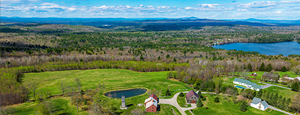
April 2026 – Five Rivers Conservation Trust is pleased to announce the permanent protection of 102 acres of forest, hayfields, stone walls, wildlife habitat, and scenic views on Frisky Hill in Gilmanton. The land sits within the Loon Pond watershed along Route 107, known locally as Province Road, where the wooded rural route opens to sweeping views toward Loon Pond and the Belknap Range.

February 2026 – Hopkinton’s Sweatt Preserve was given to Five Rivers by Nancy Sweatt in 2003. Recently, Five Rivers purchased an abutting upland property from the Sweatt family, expanding the Sweatt Preserve to nearly 100 acres. The bulk of the purchase price came from a completely unanticipated source — Pats Peak Ski Area!

May 2026 – Five Rivers is recruiting individuals to serve on our Board of Trustees. If you care about protecting local farms, forests, wildlife habitat, clean air and water, and outdoor recreation — and want to help strengthen land conservation in our Capital Region — we invite you to learn more. Trustees serve as ambassadors for Five Rivers, provide strategic oversight, and contribute their skills through committee or task group work.
ON FACEBOOK
ON INSTAGRAM
Five Rivers Conservation Trust
10 Ferry Street, Suite 311-A
Concord, NH 03301
Click here for a map and directions.
Telephone: 603-225-7225
Email: info@5rct.org
Executive Director
Liz Short
Towns We Serve
Belmont, Boscawen, Bow, Canterbury, Chichester, Concord, Dunbarton, Gilmanton, Hillsborough, Henniker, Hopkinton, Loudon, Northfield, Pembroke, Salisbury, Warner, and Webster.
The Five Rivers
The Merrimack, Contoocook, Blackwater, Warner and Soucook Rivers converge in an area of river bottom farmland and rolling hills that defines Five Rivers’ service area.